
Guide
Handling Shelving & Layout Complexity with Precision
By Teamwork
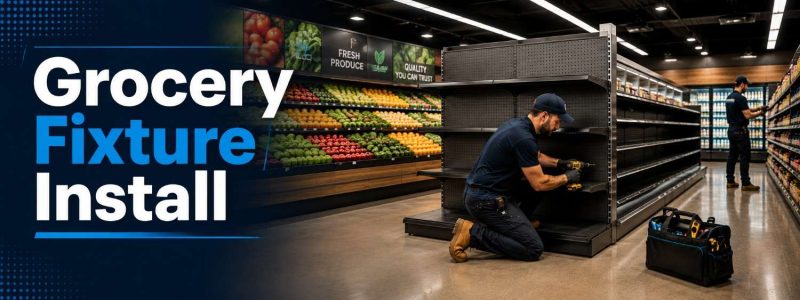
Grocery and convenience stores are not typical retail environments. They operate on tighter footprints, higher SKU density, stricter compliance standards, and faster build schedules than most retail sectors. A grocery store may carry 15,000–40,000 SKUs. A convenience store may carry fewer items, but with extremely tight shelving layouts and heavy equipment integration.
In both environments:
This guide breaks down the real-world complexities of grocery and convenience fixture installation and how to manage them effectively, from shelving systems and layout execution to national rollouts and visibility tracking.
At Teamwork, we specialize in retail installation and execution. We install per plan. We coordinate the field. We keep projects moving.
High-Density Shelving Systems
Grocery and convenience stores rely heavily on:
Unlike fashion retail or specialty stores, grocery layouts are grid-based and inventory-driven. Shelf spacing is not aesthetic, it’s operational. Small misalignments can result in:
Precision matters.
Layout-Driven Revenue
In grocery and convenience stores:
The installation team must understand that fixture placement is strategic, not decorative.
When shelving is off by even a few inches, merchandising teams lose flexibility. Our role is to execute layouts exactly as specified and ensure everything is square, level, and ready for merchandising teams to step in immediately.
Gondola Shelving Installation
Gondola shelving is the backbone of grocery environments. Key considerations during installation:
Long runs must be installed straight and consistent. Even minor deviations become highly visible across 30–60 feet of shelving. We ensure precise measurement and clean execution so merchandising teams can set products immediately.
Checkout & Counter Fixtures
Convenience stores and grocery front ends require:
These zones must balance:
Execution errors here create bottlenecks. Proper installation supports smooth operations from day one.
Promotional Displays & Endcaps
Endcaps and temporary display fixtures are high-revenue zones.
Installation requires:
In fast-paced grocery environments, these fixtures must be sturdy and retail-ready immediately.
Millwork & Custom Built-Ins
Grocery stores increasingly include:
Custom millwork installation requires:
We install per spec and ensure millwork integrates cleanly with shelving systems and architectural finishes.
Working Within Grid Layouts
Most grocery stores use grid layouts to maximize space efficiency.
Challenges include:
Installation crews must follow exact measurements to maintain aisle consistency and code compliance.
Dealing with Remodel Constraints
In remodel projects:
Install teams must adapt without compromising layout integrity. Our crews handle remodel environments with precision while minimizing disruption.
Multi-Location Rollouts
National convenience store chains often require:
Variation across locations creates merchandising issues. We support national rollout services by standardizing installation practices across markets.
Why Site Surveys Matter
In grocery and convenience environments, installation problems usually start before crews arrive. They start with assumptions.
Plans may be accurate, but field conditions often vary. Floors may slope across long gondola runs. Columns may reduce aisle spacing. Refrigeration cases may sit slightly off layout. Entry access may be tighter than expected. A proper site survey removes these risks early.
Verified Measurements
We confirm aisle widths, wall lengths, fixture runs, and clearance zones against the actual space. In high-density shelving layouts, even small discrepancies can affect planograms and customer flow.
Site Conditions
We document floor transitions, wall surfaces for vinyl installation, existing obstructions, and anchoring feasibility. This ensures crews arrive prepared with the right hardware and sequence.
Floor & Alignment Checks
Long shelving runs must stay level and consistent. Uneven floors create visible misalignment and instability. Early assessment prevents correction work later.
Access & Staging
We review delivery access, unloading zones, and staging areas so installation time is spent assembling fixtures, not navigating obstacles. Our survey reports provide designers and project managers with accurate field data before installation begins. When the field matches expectations, execution moves efficiently.
Avoiding Common Installation Pitfalls
Without proper documentation, projects face preventable setbacks.
Anchoring Issues
If anchor points are not verified in advance, gondola installation slows down and rework becomes likely.
Fixture Quantity Gaps
Missing components or incorrect quantities may only be discovered once crews are onsite, delaying progress.
Clearance Violations
Aisle widths and exit paths must meet compliance standards. Field validation ensures fixtures fit correctly.
Equipment Conflicts
Fixture placement must align with refrigeration, electrical, and other fixed systems. Early review avoids repositioning during install.
Strong documentation protects timelines and budgets. In grocery and convenience fixture installation, preparation is part of execution.
Grocery and convenience stores depend heavily on:
Graphics installation requires:
Visual branding must match the plan exactly. We install signage and graphics with care so stores open on brand and on schedule.
Grocery and convenience stores operate in constant campaign cycles:
Execution must be fast and organized. We handle pop-up retail buildouts and rapid campaign transitions without disrupting operations.
Powered by CONNEXT
Complex grocery installs require visibility. With CONNEXT, our proprietary project management platform, clients receive:
This ensures transparency across locations and accountability in the field. CONNEXT is not for sale, it’s our internal tool used to keep your projects organized and on track.
Clarity matters in retail construction support. We focus on execution, not design or manufacturing. Our role is to install, coordinate, and deliver clean, reliable results in the field.
Retail Installation & Store Fixture Setup
We install shelving systems, gondolas, counters, displays, and merchandising fixtures according to plan. Whether it is a new build, remodel, or reset, our crews execute with accuracy and consistency.
Millwork Installation
From cabinets and built-ins to decorative trim and custom finish elements, we install millwork with attention to alignment, fit, and durability. Custom millwork installations are handled with the same precision as standard fixture setups.
Sign & Graphics Installation
We install vinyl wall wraps, window graphics, floor decals, lightboxes, and branded signage so stores open on brand and on schedule.
Site Surveys & Audits
We conduct pre-install site surveys to verify measurements, document conditions, and prevent field surprises. Clear documentation protects timelines and budgets.
National Rollout Services
For multi-location grocery and convenience programs, we coordinate consistent execution across markets. Standardized processes ensure every location reflects the same layout and brand standards.
Project Tracking & Execution
Through CONNEXT, our proprietary platform, clients receive real-time updates, field photos, and timeline visibility throughout the installation process.
In grocery and convenience environments, small execution gaps become visible quickly. These stores are dense, fast-moving, and layout-driven. Precision is not optional.
Confirm Measurements Before Fixture Placement
Even after site surveys, measurements should be reconfirmed before anchoring or assembling long shelving runs. A final field check ensures aisle widths, wall spacing, and clearance zones match the plan. Correcting a two-inch error early prevents hours of rework later.
Anchor Gondolas Properly Where Required
Tall shelving and loaded gondolas must meet structural and safety requirements. Anchoring should follow local code, manufacturer guidance, and store specifications. Improper anchoring risks instability and compliance issues, especially in high-traffic grocery aisles.
Keep Aisles Consistent for Customer Flow
Grid layouts depend on uniform aisle spacing. Uneven runs disrupt traffic flow, impact ADA compliance, and create merchandising challenges. Installers must maintain straight lines and consistent spacing across the entire sales floor.
Coordinate with Refrigeration and Equipment Teams
Fixture placement often intersects with refrigeration cases, freezers, bakery counters, and electrical systems. Close coordination prevents overlap and repositioning. Installation sequencing should account for equipment delivery and activation timelines.
Protect Finishes During Installation
Vinyl flooring, polished concrete, millwork finishes, and painted surfaces must be protected during assembly. Surface damage leads to repair costs and delays. Clean handling and proper staging reduce risk.
Maintain Clean Staging Areas
Organized staging improves efficiency and safety. Materials should be grouped logically, pathways kept clear, and debris removed consistently. Grocery installations operate within tight spaces, so clutter quickly becomes a productivity issue.
Document Progress Daily
Daily photo documentation provides accountability and clarity for project managers. It supports timeline tracking, confirms milestone completion, and creates a clear record of field conditions.
Confirm Planogram Alignment Before Turnover
Before handoff, fixture placement should align with merchandising plans. Shelf heights, endcap positioning, and promotional zones must match layout drawings. This ensures merchandising teams can set product immediately without adjustment.
Execution details determine whether a store opens smoothly or experiences delays. In grocery and convenience builds, precision drives readiness.
Before turnover, the installation must be retail-ready.
Fixtures Secured and Level
All gondolas, counters, and displays should be stable, aligned, and structurally sound.
Endcaps Properly Positioned
Promotional zones must align with layout plans and sit square to main runs.
Checkout Counters Fully Assembled
Front-end areas should be operational and ready for equipment integration.
Millwork Seams Clean and Tight
Built-ins, trim, and decorative finishes should present a finished appearance with no visible gaps or damage.
Signage Installed Correctly
Graphics must be straight, bubble-free, and consistent with brand placement.
Floor Areas Clear
All debris, packaging, and staging materials should be removed. The sales floor should be clean and safe.
Field Photos Completed
Final documentation should capture completed zones and key installation details.
Final Walkthrough Conducted
A structured walkthrough confirms scope completion and addresses any final adjustments before handoff.
A clean, organized turnover supports merchandising teams and ensures the store opens ready for business. In grocery and convenience environments, readiness is not just about completion. It is about precision, safety, and operational flow.
Grocery and convenience store installations are detail-driven environments.
When fixture installation is handled correctly:
At Teamwork, we focus on execution. We install with precision. We provide visibility. We support retail construction teams with dependable field coordination. If you’re planning a grocery remodel, convenience rollout, or fixture reset, our crews are ready to execute.
On time. On brand. With complete visibility.
Summary
Retail display design helps attract shoppers, improve customer flow, and support sales. This guide covers five practical tips for layouts, signage, fixtures, branding, and visual storytelling while avoiding common mistakes. It also shows how Teamwork and CONNEXT help retailers execute consistent, engaging displays.
Request Estimate
Download the printable PDF version of this checklist and keep it on-site for your next rollout or remodel. With Teamwork, you’ll always have a clear path to a successful install.
Copyright © 2026 TEAMWORK | Privacy Policy | Term & Conditions | Sitemap